Advanced SI & PI Simulation Analysis

Simplify your complex designs from scratch to manufacturing using simulation-driven solutions for better output. XpertRF offers efficient analysis services designed as per client specifications within a stipulated time frame.

Signal Integrity Analysis

We offer a wide array of Signal Integrity Analysis Services to address the sharp upturn in system-level SI issues that cause project delays and increased costs. We support quick-turn design analysis.

SI Challenges We Solve

Modern high-speed designs face numerous signal integrity hurdles:

Rapid rise times (increasing bandwidth)
Controlled Impedance & Reflections
Crosstalk & Skew
Loss & Dispersive effects (skin effect, dielectric losses)
Power supply droop and ground bounce
Common-mode radiated noise (EMI)

SI Analysis Advantage

Including SI Analysis in your design flow is critical for success:

  • Higher chances for first-time success
  • Avoid costly "trial and error" prototype iterations
  • Eliminate risks of poor production yield and unreliable operation
  • Ensure robust and good signal integrity in the final product
  • Reduce project delays and development costs
  • Improve system reliability and performance

Power Integrity Analysis

XpertRF offers efficient Power Integrity Analysis Services to various customers and organizations. We specially design these services as per the specifications given by the clients within a stipulated time frame.

Our PI Analysis Service

Comprehensive power integrity solutions for your high-performance designs:

Power Delivery Network (PDN) Impedance Analysis
DC Drop and Current Density Analysis
Decoupling Strategy and Capacitor Optimization
Simultaneous Switching Noise (SSN) Analysis
Power Plane Resonance Analysis
Integration with SI for System-Level Performance

PI Analysis Benefits

Key advantages of including PI analysis in your design workflow:

  • Prevent power-related system failures
  • Optimize power distribution network design
  • Reduce electromagnetic interference (EMI)
  • Improve system stability and reliability
  • Minimize voltage fluctuations and noise
  • Ensure consistent power delivery to all components

Simulation-Driven Engineering Proof

Real post-layout SI, PI, and Thermal simulations executed using industry-grade solvers to validate high-speed, high-power designs.
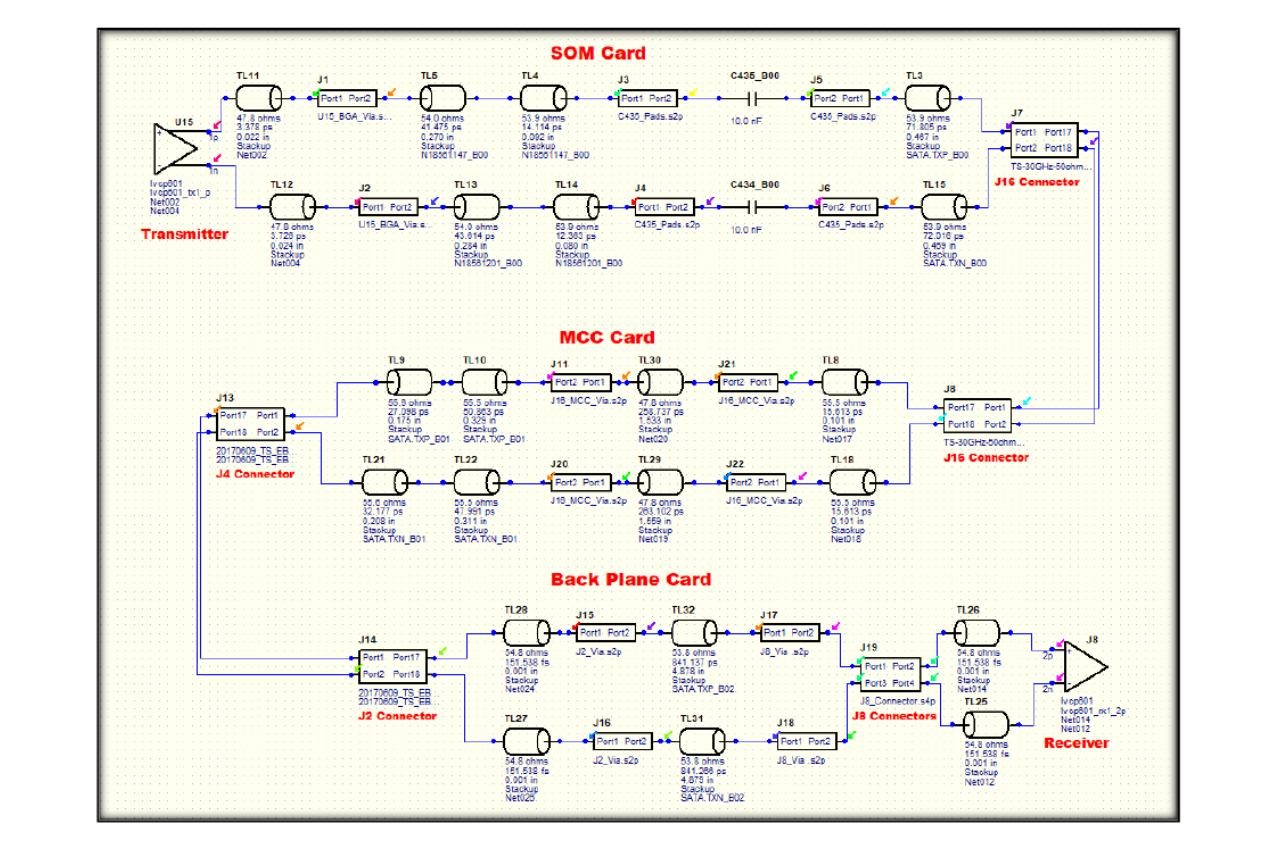
SGMII SERDES Analysis

SGMII SERDES Signal Integrity

Post-layout eye diagram and channel analysis validating 1.25 Gbps SERDES compliance across SOM, MCC, and Backplane cards.
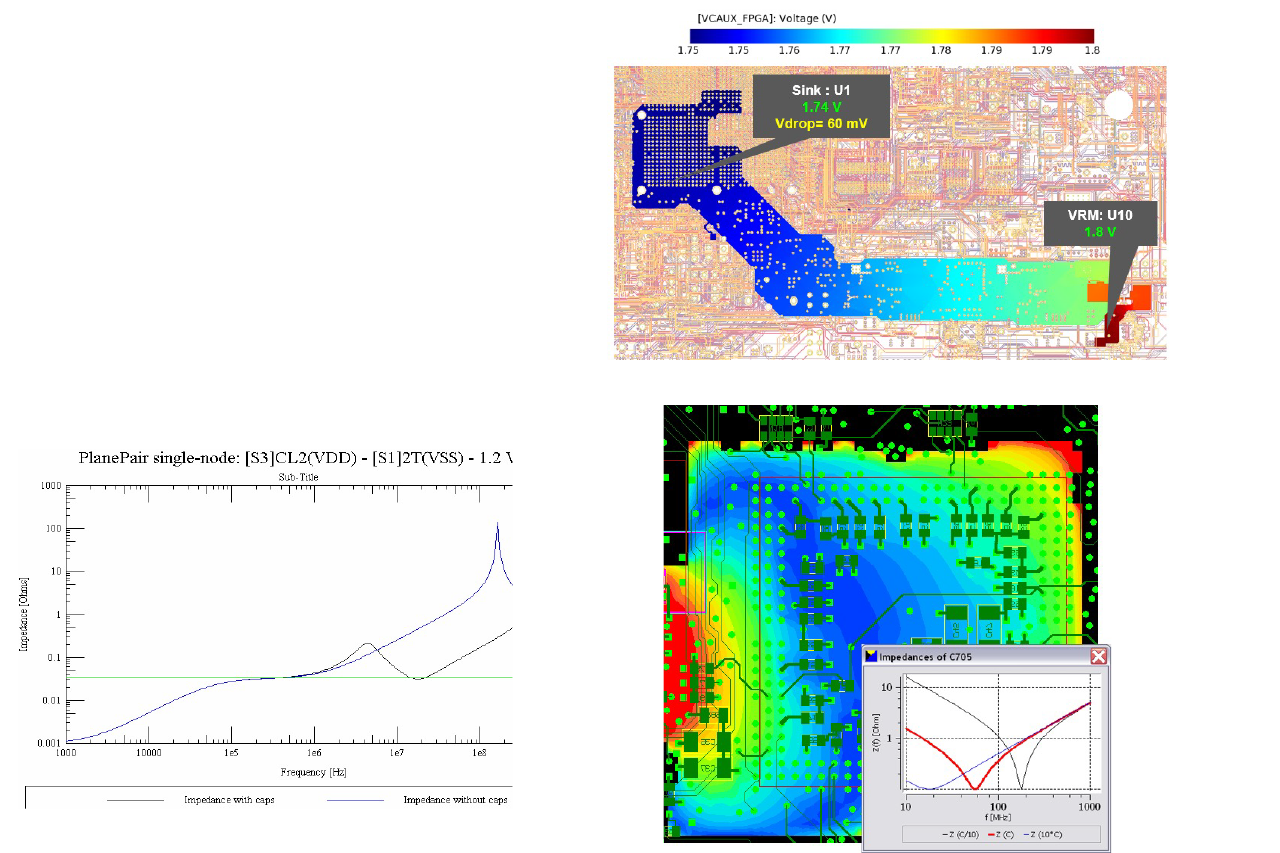
Power Integrity Analysis

Power Integrity & PDN Analysis

Voltage drop, PDN impedance, and current density analysis ensuring stable power delivery under dynamic load conditions.
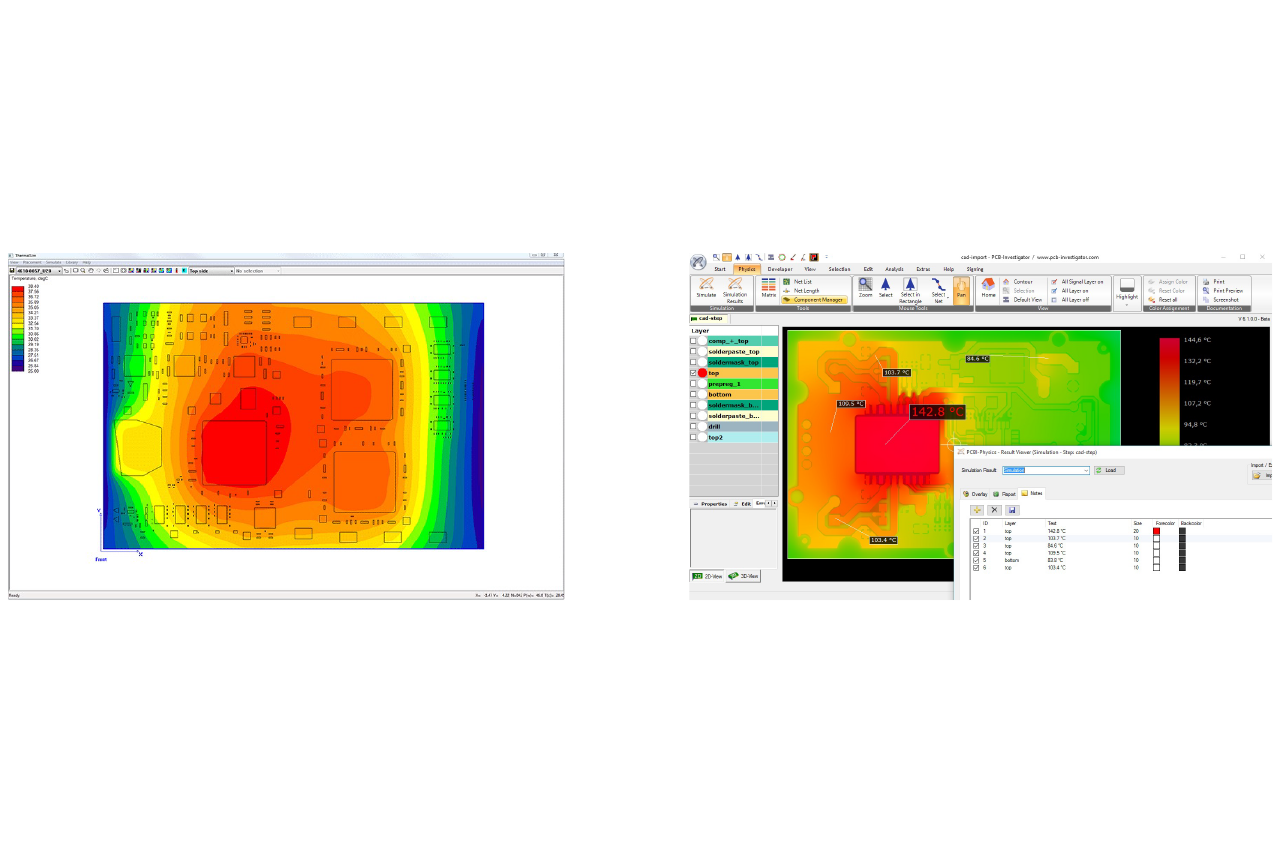
Thermal Analysis

Thermal & Hot-Spot Analysis

Component-level thermal simulations identifying hot-spots and verifying junction temperatures under worst-case scenarios.

Our Analysis Process

Structured workflow ensuring accurate and reliable simulation results

1

Requirements Analysis

Understand design specifications, constraints, and performance goals

2

Model Setup

Create accurate simulation models and configure analysis parameters

3

Simulation Execution

Run comprehensive SI/PI simulations using industry-standard tools

4

Results Analysis

Analyze simulation data and provide actionable recommendations

SI Analysis Case Studies

Real-world examples of our signal integrity analysis delivering clear, measurable results.

SGMII Interface SERDES Analysis

Scope: Multi-board post-layout Serdes simulations for an SGMII interface.

Work Performed:

  • Post-layout SI simulations for a transmitter pair running at 1.25 Gbps
  • Analysis from U1 to U15 on the ABCM board
  • Eye diagram analysis and margin verification
  • Compliance with SGMII standard specifications

Result: Eye density plot satisfied all eye mask requirements per SGMII standard specifications.

DDR4 Memory Interface Analysis

Scope: Post-layout SI simulations for a DDR4 section on a critical board.

Work Performed: Comprehensive analysis for:

  • Data Section timing and signal quality
  • Address/Command Section integrity
  • Clock Section jitter and skew analysis
  • Timing Analysis for write/read operations

Result: Eye diagrams confirmed waveforms at the receiver satisfied all threshold requirements for write operations.

SATA Interface SERDES Analysis

Scope: Multi-board post-layout Serdes simulations for a SATA interface across SOM, MCC, and Backplane cards.

Work Performed:

  • Simulations for 3 Gbps transmitter pair from processor to backplane
  • Simulations for 3 Gbps receiver pair from backplane to processor
  • Multi-board signal path analysis
  • Connector and via optimization

Result: Eye density plot met all eye mask requirements as per SATA standard specifications.

```
Email Us Call Us WhatsApp